
How to Text From a Computer
Your front desk texts a customer about their appointment. Your service tech texts a follow-up after the job. Your sales rep texts a quote the moment a lead comes in. But when all of that texting happens on their personal phones, you have no visibility into any of it.
That can create some serious problems for any business, but if you have multiple locations, multiple team members, and dozens of customer conversations happening every day, you can wind up with a real mess.
What happens when a customer follows up and the person they texted is off that day? What happens when two locations need to share a thread? What happens when a manager needs a compliance record of every customer conversation?
Nothing.
No one else knows about it. You can't track it, another team member can't pick up the lead, and you have zero compliance trail, making the traditional mobile experience pretty limiting in business contexts.
There's a fix that keeps every customer conversation visible, assigned, and covered, even when a team member steps away. In this post, I'll show you:
- How to text from a computer (four basic methods + a better way)
- Why individual tools and personal options fail teams almost immediately
- What a shared inbox allows your team to do
- How to navigate compliance hurdles (A2P 10DLC registration and more)
- How to add texting to your landlines without changing carriers or numbers
By the end, you'll be texting from your computer in no time using the method that makes the most sense, whether you're a solo user or part of a team managing hundreds of customer conversations.


Key Takeaways
- You can text from a computer using Phone Link on Windows, Apple Messages on Mac, Google Messages for web, or a browser-based business texting app.
- Consumer phone-syncing tools work for one person but break down the moment a second teammate needs to see the same customer conversation.
- A shared SMS inbox lets your whole team read, reply to, and assign customer texts from one browser tab, on any device.
- Business texting from a computer requires A2P 10DLC registration, toll-free verification, and opt-out tracking to stay carrier-approved and TCPA-compliant.
- Teams can text-enable existing landline and VoIP numbers for desktop use without switching carriers or changing the number people already know.
When Personal Texting Methods Fail Teams
Personal texting works . . . sometimes.
A support rep texts a customer to check in on an issue. The customer responds with a question, and the rep answers. A dispatcher messages one driver to make a route adjustment, and the driver does it.
But it fails in two ways. First, everything depends on that individual and their device. If the texter's phone dies or they call in sick, your business has zero opportunity to take over the texting thread.
You also run into a scalability problem. One-to-one messaging might work fine, but what about messaging 20 drivers? Or 400 customers?
There are plenty of advantages to texting over email and calls, but you need to manage it compliantly, centrally, and at scale.
I'll get to that in a minute. But first, let's walk you through how to text from a computer for personal reasons, using four different methods.
Texting From PC, Mac, or Browser
There are four main ways to text from a computer:
- Microsoft Phone Link for Windows PCs
- Apple Messages/iMessage for Macs
- Google Messages for web for Android phone/tablet users
- Browser-based SMS apps for businesses needing richer features like broadcasts and shared inboxes
Microsoft Phone Link for a Windows PC
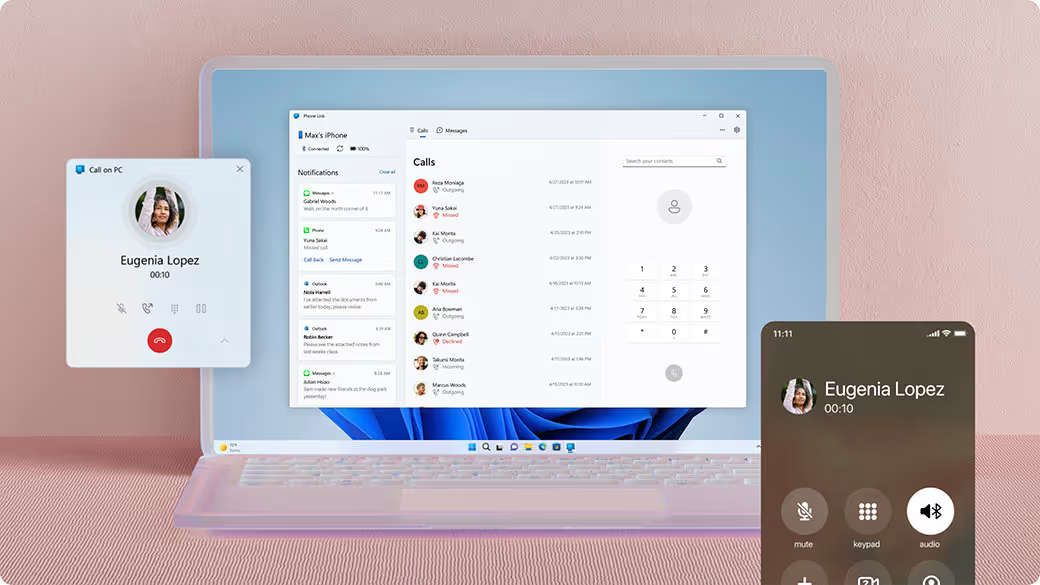
Microsoft Phone Link works as a PC app + accompanying mobile app combo (mobile apps available for Android and iOS).
Quick FYI:
- You can use Phone Link on iPhone, but the full SMS feature set only exists for Android.
- Microsoft says this approach works with "select" Android devices from the bigger manufacturers, like Google, Samsung, and Oppo.
Here's what to do:
- Download the Link to Windows app.
- Open the Phone Link app on your PC.
- Sign in to both devices/apps using the same Microsoft account.
- Android: On your PC, select "I have the Link to Windows app ready," then "Pair with QR code." iOS: On your PC, select "iPhone" under "Pick your phone."
- If needed, tap "Link your phone and PC," then scan the QR code using your phone's default camera.
- Follow the prompts to grant permissions.
- In the Phone Link app, select a contact, create a new message, and send.
Apple Messages with iPhone on macOS Tahoe

If you're an Apple user (iPhone and Mac), texting from your computer is even simpler.
But be aware: This option only works if you have two Apple devices both signed into the same Apple ID (most Mac-and-iPhone users do).
- On your Mac, open the Messages app and sign in with your Apple Account credentials if needed.
- Choose Settings in the menu, click iMessage, then "Store your messages in iCloud."
- Choose the email address(es) and phone number(s) you want to use.
- On your iPhone, open the Settings app, tap Apps, then Messages.
- Turn on iMessage (if it's not already on) and tap "Text Message Forwarding."
- Open the Messages app on your Mac to send an iMessage, SMS, RCS, or MMS to any email or mobile phone number.
Google Messages for web on Android
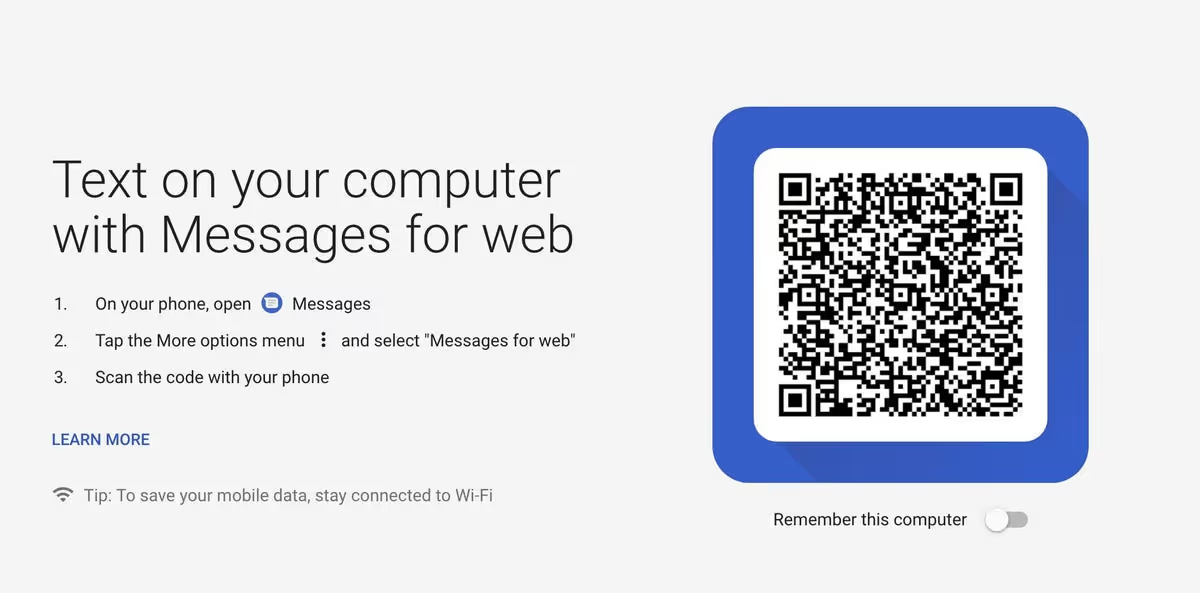
Google also has an exclusive method for sending texts from a computer. This one works from any PC with a modern browser, but only on Android mobile devices.
If you're one of the rare Mac + Android users, this is the best personal option for you.
- Go to messages.google.com on your computer.
- Click "Pair with QR code" and check "Remember this computer."
- On your Android phone, open Google Messages.
- Tap the profile circle above your conversation list, then "Device pairing," then "QR code scanner."
- Scan the QR code, which will bring all your conversations up in your computer's browser.
- Start sending SMS and RCS messages right from your browser.
Using a web-based SMS app in any browser
The three methods above are great for individuals and quick 1:1 texting scenarios, but businesses need more.
Browser-based business texting apps work on any device without phone pairing. And they operate around a shared inbox, not an individual's personal phone.
They also give businesses tools to broadcast messages, receive text messages at their landline number, assign messages, and audit comms for compliance.
The exact how-to depends on the app you choose, but I'll walk you through one great option further down.
{{inbox_conversation="/media"}}
Personal Apps vs. Business Texting Platforms
What consumer tools get right and where they fail
Consumer tools like Apple Messages, Google Messages for web, and Phone Link are easy to set up and free to use, and stick to familiar interfaces and design language.
But these apps fail (and quickly) when businesses try to use them for things the creators never intended:
- They don't schedule messages at scale.
- They don't show a compliance trail.
- They don't give companies visibility into who said what and when.
- They don't allow for shared access (where multiple dispatchers can see the same incoming messages).
Think about those dispatchers. With consumer tools, one dispatcher can text one driver (slow and inefficient) or a group of drivers (group-text chaos and potential privacy issues).
But what if drivers respond during the next shift, while the sending dispatcher is sound asleep at home? Or what if two drivers attempt to claim the route simultaneously, and no one gets back to them?
In these and a hundred other real-world business situations, consumer tools won't get the job done. You need business texting software built for teams.
What a shared SMS inbox adds
The best business texting software for teams provides a shared SMS inbox where multiple team members can collaborate to receive, assign, and respond to incoming text messages.
A shared inbox also unlocks:
- Assigning conversations to agents/team members
- Opening and closing conversations
- Internal comments
- Role-based access
- Audit visibility
It also adds speed and confidence. You can respond to inbound messages faster, knowing you're not duplicating responses or leaving customers hanging.
{{inbox_annotated="/media"}}
Text From Your Computer With MessageDesk
MessageDesk lets team members text from any device with full conversation visibility and conversation assignments, plus a lot more.
How the shared inbox works on desktop
MessageDesk's shared inbox lets your whole team read, reply to, and assign customer texts from one browser tab.
No need to install an app. Just log in using any web browser on any OS.
Multiple team members can log in and work simultaneously.
{{inbox_screen="/media"}}
Assigning and routing conversations across your team
One click claims ownership over a conversation. You can also click to assign ownership to another team member.
Teammates see who is handling which messages, preventing duplicate replies.
Why this matters: Efficient messaging workflows need ownership. MessageDesk's assignment feature makes ownership clear and visible.
{{inbox_filters="/media"}}
Connecting your existing business number
MessageDesk also text-enables existing landline and VoIP numbers without disrupting voice service.
It's compatible with many platforms, including RingCentral, Zoom, Nextiva, Dialpad, and most mobile carriers and legacy telephony providers.
Why this matters: Customers already know your business number (and they may already be trying to text it). Text-enabling avoids downtime, confusion, and messy number changes.
{{sms_phone_number="/media"}}
Automating workflows with MessageDesk Relays
Relays are MessageDesk's internal inbox automations. Teams use Relays to route, assign, label, and auto-reply to messages according to your rules, saving you time and resources.
If you need more connectivity or automation, MessageDesk offers a beta Zapier integration that connects to 9,000+ other apps with no custom code needed.
Example workflow:
- New CRM lead hits HubSpot
- Zapier integration fires
- MessageDesk sends an automated welcome SMS
- The lead replies
- The reply lands in the shared inbox
- A Relay auto-assigns it to the right team member
{{inbox_autoresponders="/media"}}
Three Business Texting Compliance Basics
Business texting has some strict regulations:
- A2P 10DLC: Carriers now block all unregistered business SMS messages that don't comply with A2P 10DLC outright. A2P SMS makes up 40% of the premium messaging market, so carriers strictly enforce compliance. Skip registration and your texts don't arrive.
- Toll-free verification (if applicable): Larger businesses or those with higher messaging volumes may text from a toll-free number. If that's you, carriers require verification before you can send.
- Opt-out handling: Business texts must include a functional opt-out option.
Desktop Texting Examples by Team Type
Here are three real-world workflows where software-based texting tools make business flow smoother.
Customer support and service teams
A support team uses open/closed conversation states to track resolved issues, so every team member can see real-time status.
Internal comments let teammates hand off context without asking the customer for the same information multiple times.
Dispatch and field operations teams
A dispatcher fields an inbound job request, then assigns it to a specific field tech using the shared inbox.
That tech replies from the field, and the dispatcher can respond to or act on that message immediately.
Personal devices create a single point of failure. One shared inbox means a sick day doesn't lose you the job.
Sales, outreach, and healthcare coordination teams
Two examples show how this plays out across different teams:
- A traveling sales rep can schedule text messages from any device immediately after a demo, while the client is still front of mind.
- A hospital staffing coordinator who needs a shift covered could broadcast that to a team of nurses or contractors. Those recipients could then confirm via SMS rather than calling in.
Remember: Use cases like these (even internal ones) need opt-out tracking and consent records.
You'll save a lot of hassle by choosing a business texting platform that takes care of these for you automatically.
Start Texting From Your Computer Today
If you just need to text individuals from your computer (and not for business reasons that trigger compliance issues), then consumer tools are a solution.
But if you're part of a business team, you need a messaging service that functions like a shared workspace, one built for collaboration and compliance. Not fancy phone forwarding.
You need a shared inbox where you can consolidate and assign messages.
You need tools that can schedule texts and broadcast bulk messages.
And you need systems for handling compliance, like opt-outs and A2P 10DLC registration.
MessageDesk logs every message, manages opt-outs automatically, and keeps your whole team in one inbox.
You focus on scaling SMS communications. Let us handle compliance: Get started with MessageDesk.
FAQs
Can I send and receive text messages from my computer?
Yes, you can send text messages from a computer using Microsoft Phone Link on Windows, Apple Messages on Mac, Google Messages for web on Android, or a browser-based business texting app.
The first three methods sync your personal phone to your desktop, so your computer acts as a mirror for your mobile number. Browser-based platforms like MessageDesk work differently: they give your whole team access from any device without pairing to anyone's personal phone.
Can multiple team members text from the same business number on desktop?
Consumer phone-syncing tools don't support this, because they tie to one person's device and carrier account. A shared SMS inbox like MessageDesk lets multiple teammates read, reply to, and assign conversations from the same business number, all from a browser. Every message is visible to the team, ownership is explicit, and duplicate replies stop being a problem.
Can I text from my computer without using my personal phone?
Yes, browser-based business texting platforms let you send and receive SMS texts from any computer without pairing to a personal device. This matters for teams: if the person whose phone is synced calls in sick, the whole conversation history goes with them. With a platform like MessageDesk, the inbox lives in the browser, not on anyone's phone.
What is the best way to text customers from a computer for a business?
A shared SMS inbox accessible from any browser is the most practical option for teams that handle ongoing customer conversations. It gives every teammate visibility into the same threads, lets you assign conversations to specific people, and keeps a full message history without depending on one person's phone being online. MessageDesk also lets you text-enable your existing landline or VoIP number, so customers reach you on the number they already know.
How do I text from a Windows PC?
Microsoft Phone Link is the built-in option for Windows 11: install the app, pair it with your Android phone via QR code, and you can send and receive texts from your desktop. Note that full SMS support requires an Android device; iPhone support through Phone Link is limited. For teams that need shared access, a browser-based platform works on any Windows machine without phone pairing.